PS 202 · OBJECT MODEL
How do project definitions and WBS elements organize work?
Separate the overall project frame from hierarchical work packages, responsibility, account assignment, planning, budget, billing, and settlement roles.
READ THE MODEL
One project structure can govern delivery and commercial fulfilment
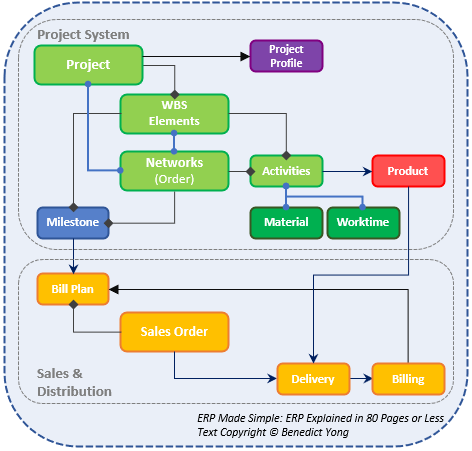
Start with the project and its profile: they provide the governing frame. WBS elements then divide the work into accountable packages and connect the structure to planning, budget, cost, billing, and settlement responsibility.
Where detailed execution is needed, networks break WBS work into activities. Activities can carry milestones, materials, and work time, making planned work, progress, and resource consumption visible. The output can be a product or service deliverable.
For customer-facing work, the model continues into Sales and Distribution: a billing plan and sales order define the commercial commitment, delivery records fulfilment, and billing creates customer-facing financial evidence.
VALUE STATES
Keep project governance, work execution, and outcome distinct
Each object answers a different project-control question.
Project and profile
Mandate, organisational framework, coding, defaults, status rules, and control model.
WBS element
Accountable scope, responsibility, planning, budget, commitments, cost, and settlement.
Network and activity
Detailed work sequence, dates, milestones, capacity, materials, and confirmation.
Sales and delivery
Commercial commitment, fulfilment, billing, and revenue evidence for customer projects.
OBJECT MAPPING
Follow project responsibility through its objects
The project frame governs WBS accountability; networks add execution depth; sales and delivery objects carry the commercial branch when the project delivers to a customer.
OPERATIONS CONNECTION
Keep project governance, work execution, and commercial outcome distinct
PS connects these objects into one delivery structure. Each remains responsible for a different decision, record, and proof.
Not every project needs the customer-facing branch. Use it when the project is part of a revenue-bearing delivery, and keep the commercial evidence separate from project cost and settlement evidence.
See how this capability changes across valid integration models.