TM 202 · OBJECT MODEL
How do TM transport objects fit together?
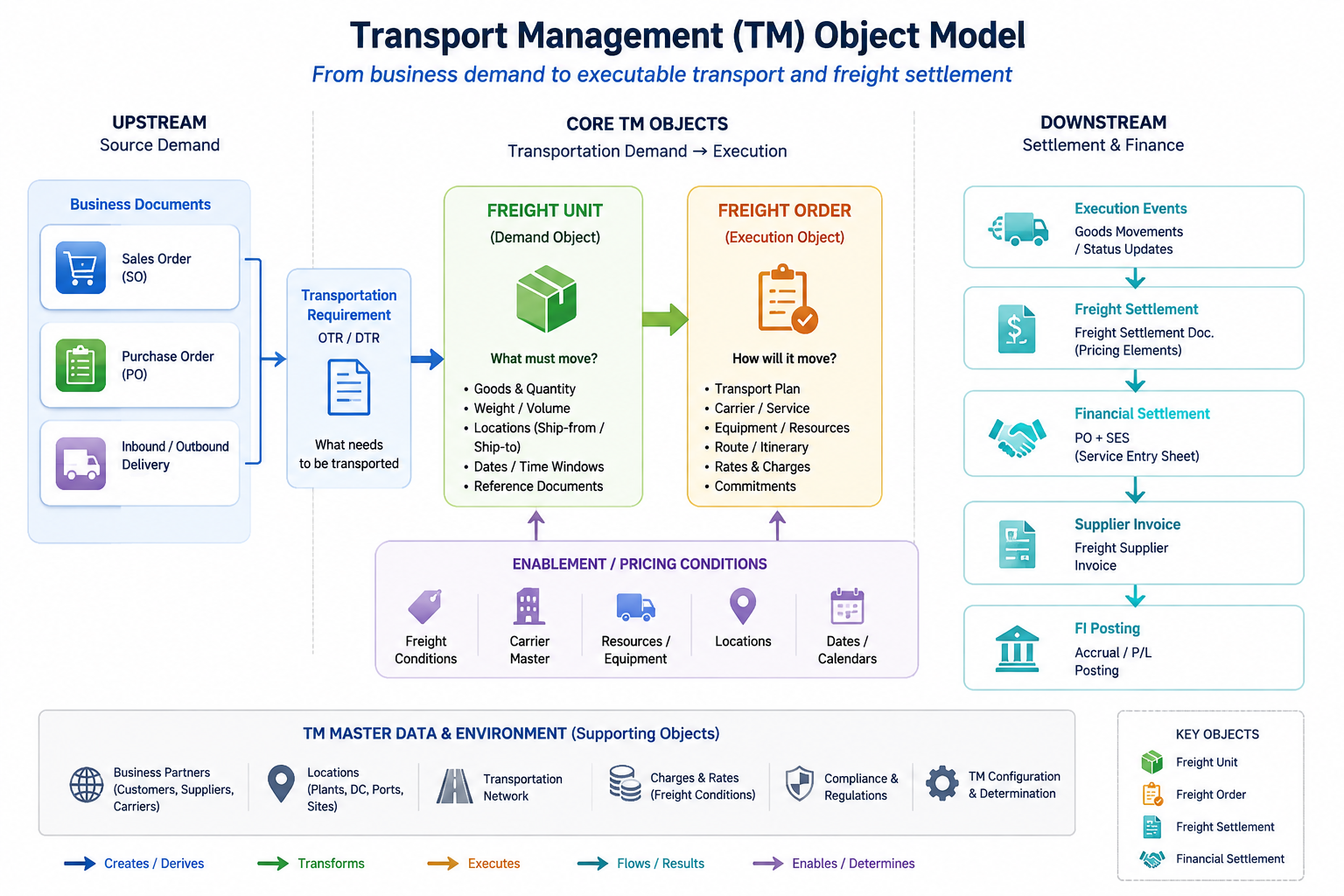
Basic TM is not one flat transport document. Delivery-based demand becomes transportation demand or DTR, FUBR creates Freight Units, planning creates Freight Orders, execution records events, and settlement carries carrier cost into purchasing, invoice verification, and FI.
READ THE MODEL
Trace demand into settlement evidence
Keep the business need, transport plan, physical movement, and commercial result distinct.
01 · DEMAND
Delivery / DTR / FUBR / FUMake demand transportable without losing its business reference02 · PLAN AND EXECUTE
Freight Order / stops / eventsAssign feasible route, schedule, resource, equipment, carrier, and status evidence03 · COST AND SETTLE
Charges / FSD / PO / SES / invoice / FIReconcile the commercial consequence of the movement
DIAGNOSTIC EVIDENCE
Ask the question at the correct layer
Transport problems become recoverable when the team checks the decision, source data, document, and event evidence in that order.
Delivery reference, locations, requested dates, quantities, transportation relevance, and update messages explain what TM was asked to plan.
Compatibility, assignment, stops, schedule, resource, equipment, carrier assignment, status, events, and exceptions explain the transport decision.
Agreement, calculation basis, expected charges, FSD, purchasing follow-on documents, invoice state, and FI posting explain the commercial result.
Trace the rules behind demand, planning, execution, and freight cost.