PROCURE TO PAY · ACCOUNT DETERMINATION
How do P2P events reach Finance?
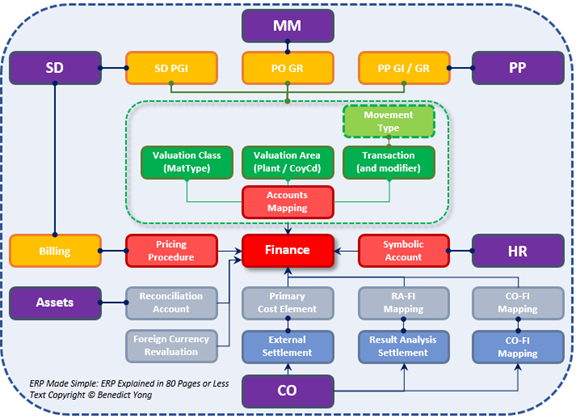
Material valuation, transaction keys, account modifiers, and account mapping turn P2P goods movements and invoice events into explainable Finance postings.
PROCESS ROLE
Account determination connects an operational event to the intended accounting result
A goods receipt or invoice does not select accounts by chance. SAP evaluates the event, material and valuation context, transaction key, and any account modifier to produce a controlled posting that Finance can trace back to the purchasing document.
OPERATIONAL FLOW
What happens in SAP
Read the sequence as one connected business event, not as isolated transactions.
Post the purchasing event
Goods receipt, goods issue, invoice receipt, return, transfer, or price difference creates the accounting-relevant event.
Read valuation and material inputs
The valuation area, material valuation class, stock or consumption path, plant, and movement context identify the applicable determination inputs.
Resolve the account rule
The transaction key and account modifier select the configured G/L account mapping for the event.
Reconcile source and ledger
Confirm the material and accounting documents, quantities, values, GR/IR position, and resulting FI lines tell the same business story.
DESIGN & CONTROL
What shapes the result
These controls work together; a locally correct setting can still produce the wrong end-to-end outcome.
Valuation context
Valuation area and valuation class distinguish material value behavior so different materials can post to appropriate inventory, consumption, or difference accounts.
Transaction logic
Transaction keys and modifiers represent the accounting meaning of the event, such as inventory movement, GR/IR, price difference, or consumption.
End-to-end evidence
The PO, material document, invoice document, accounting document, account mapping, and reconciliation result must remain traceable without manual account overrides.
DIAGNOSTIC EVIDENCE
Explain the posting from the business event to the G/L account
A correct debit and credit is only the result. Retain the rule inputs and document references that explain why SAP chose those accounts.
PO, item, material, plant, movement type or invoice event, quantity, value, and source-document status.
Valuation area, valuation class, transaction key, account modifier, account mapping, and any relevant account assignment.
Material and accounting documents, G/L accounts, debit and credit values, GR/IR or supplier balance, and reconciliation outcome.
P2P ACCOUNTING STORY
A stocked material is received before its supplier invoice
At goods receipt, the material and valuation settings identify the inventory account while the transaction logic posts the balancing value to GR/IR. When the supplier invoice arrives, invoice verification clears the received-value position and creates the supplier liability, with any price difference visible for review.
- Event and source document agree
- Valuation inputs are explainable
- Selected accounts match the rule
- GR/IR and supplier balances reconcile
See how demand, sourcing, commitment, receipt alternatives, invoice matching, accounting entries, payment, and clearing connect.