FP&A 202 · OBJECT MODEL
How is an FP&A planning model put together?
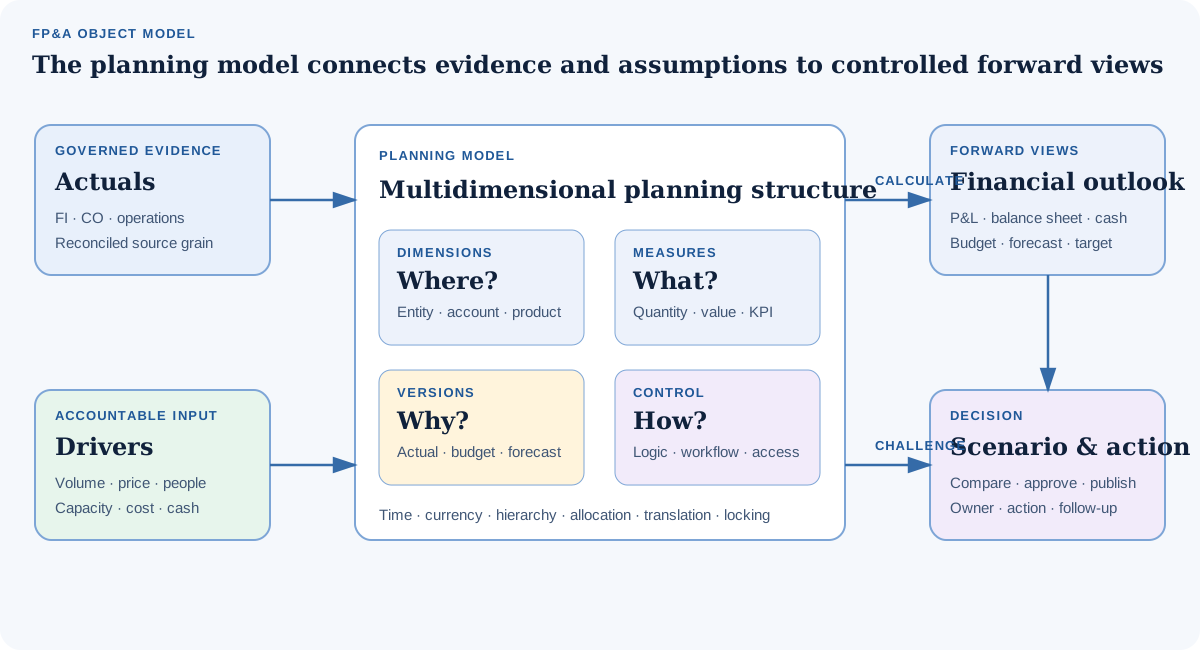
An FP&A model is not one financial document. It is a governed multidimensional structure that combines actual evidence, operational drivers, forward-looking versions, calculation logic, workflow, and management outputs without confusing their meaning.
READ THE MODEL
The planning model preserves meaning across every forward view
Dimensions define where a value belongs, measures or accounts define what it means, time and currency define its basis, and versions define why it exists. Drivers and calculations create derived results; workflow, access, and locking determine who may change or publish them.
MODEL LAYERS
One model, four connected control layers
Each layer answers a different question and requires its own ownership and reconciliation evidence.
Dimensions and hierarchies
Entity, account, cost center, product, customer, project, workforce, time, and currency determine the grain and valid combinations.
Measures, accounts, and drivers
Quantity, price, revenue, cost, headcount, capacity, cash, rates, and assumptions provide input and calculated value.
Versions and scenarios
Actual, budget, forecast, target, baseline, and scenario remain separately identified. Private versions support safe exploration.
Logic, workflow, and access
Formulas, allocations, translation, validation, locking, tasks, approvals, and security control how values become publishable.
MODEL FLOW
How evidence becomes a forward-looking decision
The model preserves a traceable boundary between source evidence, planner judgment, calculated outcomes, and approved action.
Load governed actuals
Financial actuals and operational evidence are mapped to the model grain, validated, and reconciled to their owning sources.
Enter accountable drivers
Business owners maintain volume, price, workforce, capacity, cost, project, cash, and risk assumptions.
Create coherent forward views
Transparent formulas, allocations, translations, and dependencies create budget, forecast, target, and scenario outcomes.
Publish, compare, and act
Approved versions support financial statements, variance bridges, scenarios, commentary, decisions, and assigned actions.
DIAGNOSTIC EVIDENCE
Diagnose the model layer that owns the disagreement
When totals differ, first align source, grain, time, hierarchy, currency, version, and calculation sequence.
Source, refresh, dimension members, hierarchies, mappings, calendar, currency, grain, rejected records, and reconciliation.
Version category, publication state, cut-off, driver source, formula, allocation sequence, translation rate, override, and calculation log.
Planner, reviewer, access scope, task, lock, approval, publication, commentary, decision, action owner, and follow-up result.
PROJECT MOMENT
One revenue forecast, several meanings preserved
Closed actual units and revenue load by entity, product, channel, month, and currency. Sales owners revise volume and price in a forecast version; cost and currency logic calculate margin and cash. FP&A compares the result with budget and a private downside scenario before publishing the approved forecast.
- Actuals reconcile to source
- Budget remains the approved baseline
- Forecast records the current outlook
- Scenarios do not overwrite published versions
Trace how the model supports a recurring cycle from management question to measured action.