EAM 202 · OBJECT MODEL
How is an EAM maintenance order put together?
See how company code, plant, order type, control key, operations, components, work center, routing, BOM, scheduling, settlement, and confirmation controls fit together.
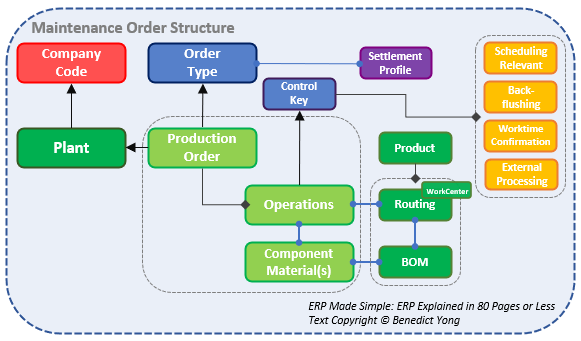
READ THE MODEL
The maintenance order turns asset work into controlled execution
Read from the outside in. Company code and plant establish the legal and operational context; the order type selects the maintenance-order purpose and its governing defaults. The control key then determines how an operation is scheduled, confirmed, costed, and, where relevant, externally processed.
Operations describe the work to be performed. They can be created from a routing and work centre, or planned directly on the order. Components and bills of material supply the parts required for the work, while the linked technical object provides the asset context being maintained.
On execution, scheduling makes dates and capacity visible; worktime confirmation records labour and progress; external processing carries supplier work through the order. The settlement profile defines where the resulting maintenance cost is collected or passed on.
VALUE STATES
Separate asset context, work control, execution, and cost
Each layer owns a different maintenance fact and proof.
Technical object and plant
Asset identity, location, maintenance responsibility, and operational context.
Maintenance order
Work scope, status, dates, approval boundary, and collected maintenance cost.
Operation and work centre
Task sequence, capacity, labour confirmation, control-key behaviour, and external work.
Components and settlement
Parts demand, consumption, and the permitted financial receiver.
OBJECT MAPPING
Follow the maintenance result through its objects
Technical object and plant context guide the order; operations and components create executable work; confirmation and settlement close the operational and financial result.
OPERATIONS CONNECTION
Keep context, execution, and cost responsibility distinct
A maintenance order connects these objects, but it does not replace their individual responsibilities. Diagnose or design the result at the layer that owns it.
The same order can carry internal work, external service, material consumption, measurement evidence, and settlement. Preserve each source and confirmation so operational completion and financial closure remain explainable.
DESIGN DISCIPLINE
Do not confuse a capability with one process
The same capability can participate in several streams. Configure it only for approved scenarios.
- 01
Business rule
State the approved condition, decision, and accountable owner before deciding how SAP should behave.
- 02
SAP object
Assign that rule to the object that carries the responsibility, master data, status, and control.
- 03
Evidence
Identify the document, confirmation, posting, or status that proves the intended result occurred.
- 04
Financial result
Reconcile the controlled outcome, cost or revenue effect, and receiving responsibility.
See how this capability changes across valid integration models.